Author: NOMIX

  • The Psychology Behind Health Messaging

    With so many medical and social studies conducted on human health, we already know what we should be doing to maximise our healthspan and our overall longevity. However, we all also know that most of us are pretty bad about putting this advice into practice. A significant amount of research has come to the overwhelming conclusion that us human beings do not always act in a way that benefits our best, more long-term interests.

    Simply, humans are not wholly rational agents… and, arguably, it’s what makes us human! So, academia has now moved past simply reporting on what the best choices for us are- and instead is now focusing on how best to promote these findings to a public that is fatigued of such health warnings. In this blog post we’ll be examining some of the psychology behind health messaging and providing you with some actionable tools on how to make your own healthier choices.

    The Psychology Behind Health Messaging

    Before we can examine the psychology of health messaging in general, we first need to explore what ‘loss-based’ and ‘gain-based’ messaging is. This terminology has been noted upon by Brian Wansink and Lizzy Pope, two Cornell and Vermont University researchers that have studied the nuances of official public health communications.

    Loss-based messaging is the medium by which the public are informed that they are harming themselves in the long-run by not meeting the recommendations of health studies (such as quitting smoking or drinking less). In the past, public health messaging has focused around loss-based messaging- the print of ‘Smoking Harms You And Those Around You’ on cigarette packets is one such example.

    On the other hand, gain-based messaging is the packaging of the act of making healthier choices into a value-add proposition to someone’s life. For example, instead of scaring an individual into quitting smoking through negativity, a gain-based message could state something along the lines of ‘For every pack of cigarettes you don’t smoke, you will live a few days longer’. The efficacy of this route has, in part, been illustrated over recent years through the proliferation of vaping as opposed to smoking. Vaping does still carry significantly negative health implications- but it has been marketed to the population of the UK as being ‘95% better for you than smoking’ (a claim backed by the National Health Service).

    Wansink and Pope, in their study, have remarked that public health officials and experts prefer loss-based health messages- while a majority of the public responds markedly better to gain-based messages. This ties into basic human psychology. A study into the American education system found that students who felt threatened by the messages perpetuated by their teachers around failing were more likely to fail than students whose teachers did not believe in such scare tactics. Simply, if we tell someone who is already struggling (be this to do with weight, schooling or almost anything else) that they are failing then they will be considerably more likely to continue failing. [1]

    A Little Nudge

    As a result of the research mentioned above, some countries and companies have begun efforts to ‘nudge’ citizens in a healthier direction. The aim of this is to enable but educate citizens to make informed choices, the benefits of which are highlighted over the negatives of their current behaviour. These nudge efforts can also incentivise the public through a variety of means that stretch far beyond promising health further down the line.

    The aim of nudging the public to make healthier choices is centered around the idea that we all already know what to do- we simply don’t do it.

    This can be because we’re demotivated because of loss-based messaging or because we just don’t feel like making the healthy choice at that time. The latter is fine, but the former needs to be addressed. Because of this, a key tenet of ‘nudging’ citizens to make a healthier choice is based around ‘enabling but educating’ and presenting choices wrapped in gain-based messaging. This allows people the freedom to make their own choices about choices that may affect their health but also empowers them to make an informed decision, free of psychological stress.

    As more and more governments begin to realise that scare-tactics do not work- we’ll be more likely to see health initiatives that reward/cajole rather than scold the public. Further, by applying gain-based psychology to our own choices, we can nudge ourselves toward healthier habits too.

    Two Tools to Help Make Healthier Choices

    The commonly cited, health official approved, four steps to living healthily are (generally);

    • Not smoking.
    • Drinking less aclohol, well within medically recommended limits.
    • Being physically active for at least 30 minutes a day.
    • Eating decent portions (5 servings) of fruit and vegetables a day.

    Now, most of the population will probably struggle to meet the above, let alone exceed it (where applicable). However, as mentioned above, we can strive to meet and exceed these healthy goals through a combination of switching our perspective and putting together a plan to meet them.

    Through switching our perspective, we can move to a gain-based lifestyle which will provide us with a more positive relationship with our health and improving it. Look at each health recommendation and, if you aren’t meeting it, instead of feeling bad about the potential adverse effects on your health and you not meeting these goals, instead visualise that each positive health decision you make will enable you to live a longer life with a longer period free of any major health conditions.

    When you couple this with a long-term plan to build healthy habits into your life- by layering each new routine or habit over a protracted period- you’ll be much more likely to enjoy the benefits of healthy living and stick with them. I’m sure we’ve all been inspired to get healthy at various times in our lives… and I’m sure we’ve all took on too much at once and suffered some whiplash at how hard all of these new routines are to maintain and eventually abandoned the entire idea. Instead, take a more measured approach, look at your choices in a more positive light and celebrate your progress.

    In Closing

    In the near future we’ll see smarter campaigns based around public health- campaigns that don’t try to shame or scare us into making healthier choices. However, the academic research into the psychology of making healthy choices hasn’t yet filtered into public policy. Instead, in the interim, we can use the psychology of ‘gain-based’ messaging ourselves to affect our own behaviour in the day to day. By striving toward a more positive relationship with our health and making healthy choices we can make progress toward our health and longevity goals without seeing these decisions in a negative light or ignoring them entirely. This, combined with careful and deliberate strategizing how we can gradually build good habits into our daily lives will ensure that we don’t start a health kick and then gradually kick it away.

    NOMIX will soon announce some exciting news that will definitely help keep you on top of your health goals- and allow you to act with longevity in mind.

    Make sure to watch this space! To be one of the first to hear, make sure to check this blog and follow NOMIX on Twitter, LinkedIn and Telegram.


    [1] Kang, O’Donnell, Strecher, Falk. Dispositional Mindfullness Predicts Adaptive Affective Responses to Health Messages and Increased Exercise Motivation, 2016.
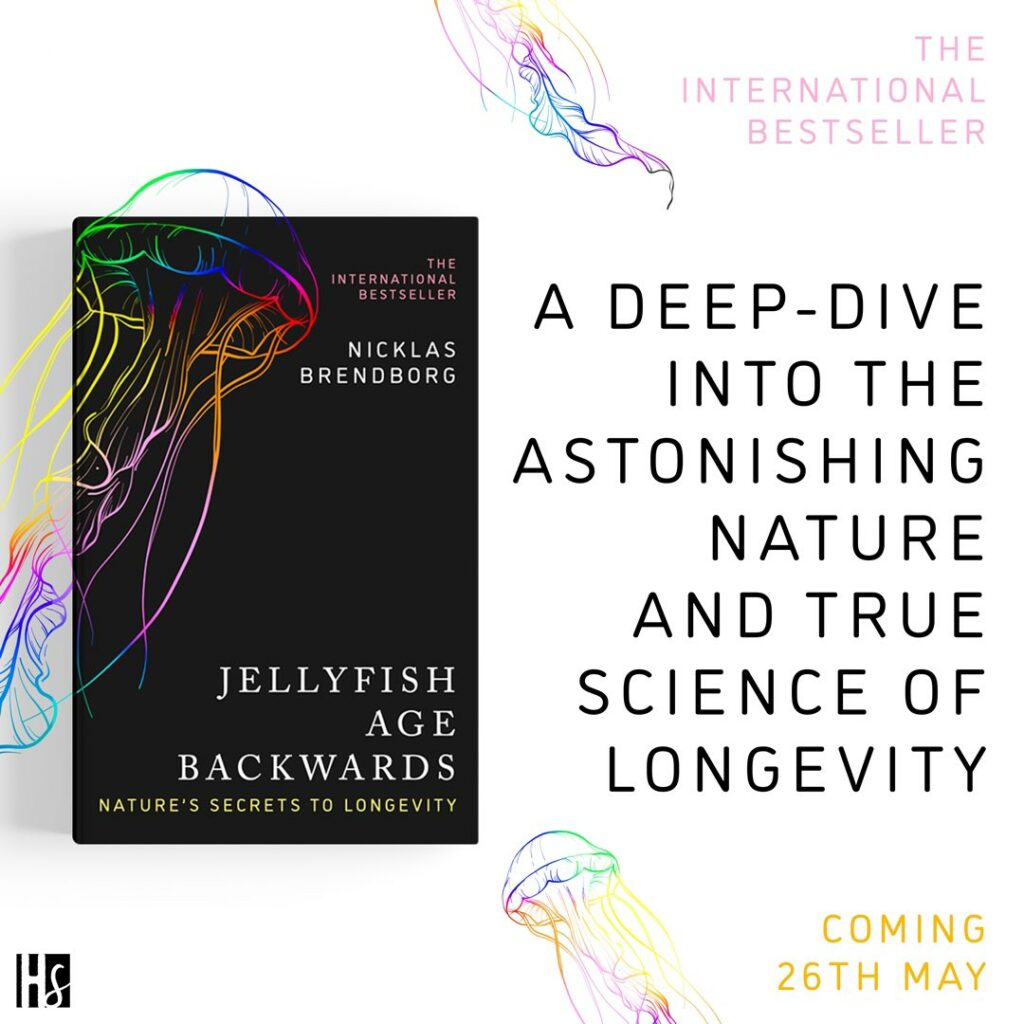
  • Molecular Biologist Nicklas Brendborg Joins NOMIX As Advisor

    We are happy to announce that Molecular Biologist Nicklas Brendborg, University of Copenhagen, has joined NOMIX as Medical Scientific Advisor! Nicklas will support the team in building longevity algorithms used by the BIOCLOCK app, based on CODIS, the Collective Digital Immune System.

    Nicklas Brendborg is a Ph.D. student of molecular biology at the University of Copenhagen and is one of the most promising research talents in the field. He was featured young scientist at the Novo Nordisk International Talent Program and was awarded the Novo Scholarship.

    In his actual bestseller Jellyfish Age Backwards, Nicklas describes nature’s secrets to Longevity, how plants and animals have already unlocked the secrets to immortality, and the lessons they hold for us humans. Although modern humans live longer today than ever before, our understanding of what is possible is limited. Nicklas uses Jellyfish and other animals to reveal the key to immortality which might not be as impossible as we all have thought until yesterday.

    Even if you can’t follow Ethereum founder Vitalik Buterin who envisions a 75% chance to see the year 3,000 for someone who is born today, or you happen not to be a 500-year-old Greenland shark, reading the NOMIX blog you probably want to live long while staying young and healthy! Then, you most likely will love Jellyfish Age Backwards, and the fact that Nicklas has joined our longevity team, even more!

    Now, let’s celebrate the fantastic success of Nicklas’ book for a moment and then start working on our healthspans!


  • A Primer on Epigenetic/Biological Clocks

    We’ve all done our share of clock-watching in our daily lives, whether it be anxiously waiting for a flight or impatiently waiting until we finish work. It may therefore be unsurprising that doctors and medical researchers do the same thing… but what may surprise you is the type of clock that they’re doggedly watching.

    These medical professionals aren’t watching any old clock, no, they’re watching the body’s internal clock, otherwise known as the epigenetic, or biological clock. In this blog post, we’ll be exploring the concept of the epigenetic clock- otherwise known as the biological clock- and we’ll cover what they are, how they work, and, most importantly, what questions they can answer.

    So what are epigenetic/biological clocks?

    It sounds strange, but people can be a different age from someone the same age as them. In short, your chronological age is different from your biological age. For example, someone can chronologically be 46 (i.e. they have lived on Earth for 46 years) and they can possess a biological age of, say, 54. How does this happen? Well, some people age quicker than others due, largely, to lifestyle factors. This is because factors such as our daily stress, the amount of sleep we get, and our diet all impact how our body functions. So, epigenetic clocks are indicators that have been developed over the last decade by doctors to gauge someone’s biological age (‘bioage’) or inner age.

    The first (and best known) biological clock was developed by Dr. Steve Horvath in 2013. Back in 2011, he and his twin brother had participated in a study examining epigenetic markers in saliva. When analyzing the data, he found that DNA methylation (more on this later) could predict a person’s age in years, with a variance of roughly five years on average. Naturally, Dr. Horvath realized that this had massive ramifications for the measuring of the body’s internal biological age.[1]

    There are now ten biological clocks measuring how humans age, ranging from the Horvath clock to DNAm PhenoAge, and there are hundreds more used for other purposes. For example, the DNAm PhenoAge clock determines phenotypic age, which, in essence, judges that you are 9% more likely to develop a serious illness for each year you are older than you are chronological.[2]  

    In short, epigenetic clocks are medical yardsticks that have recently been developed for the purpose of measuring our biological age and our overall risk of mortality.

    So how do they work?

    The exact methodology and metrics tracked behind each clock can vary, but the principle remains largely the same. Some of them have even been developed using DNA data sets to develop a neural network that is then fed through a deep learning program to determine which sets of methylated DNA contribute to biological aging.[3] Very cutting-edge stuff!

    As mentioned above methylated DNA is the cause of biological aging, despite the methodology behind the development of the clock, but why is this the case? Methylation, in a chemical sense, is the adding of a methyl group of atoms to a molecule. This changes how the proteins of the molecule interact with other proteins, which in turn impact how the molecule interacts with other molecules. Our DNA is governed by an epigenome- essentially a biological controller of how our genes ‘express’ themselves.

    The only difference between a liver cell and a brain neuron is that this epigenome tells these genes which job to do by ‘turning off’ certain pre-programmed functions. However, as mentioned above, as our DNA naturally becomes more methylated over the course of our lives these genes begin to change how they interact with their surrounding genes… and this contributes to aging and, sometimes, our risk of illness.

    This methylation occurs naturally as we age but it can also depend largely upon our lifestyle. If someone smokes heavily, for example, then certain genes will become highly methylated while others will conversely become less so. Stress, heavy drinking, a bad diet, and a lack of sleep- all similarly impact our DNA methylation levels.

    What can biological clocks be used for in the future?

    A significant amount of research still needs to be done in this field, as questions remain. However, a number of studies have emerged that suggest DNA methylation can be managed. Unlike a chronological clock, the good news is that it seems possible that the biological clock can turn back time. A clinical trial comprised of randomized individuals found that, according to the Horvath clock, individuals on the trial who lived a healthy lifestyle were 3.23 years younger than those in the control group.[4] This trial is the first that has demonstrated that we can reverse biological aging through living a healthy lifestyle (in the study, moderate exercise, breathing exercises for stress, and a diet rich in methyl donor nutrients and polyphenols were all assigned to those participants, not in the control group).

    Another study has found that there is a correlation between a high BMI and older biological age.[5] A further study found that eating a Mediterranean-style diet, with a particular amount of olive oil and nuts, reversed methylation of the body’s intermediate metabolism, diabetes, inflammation, and signal transduction.[6] Definitely a case for moving to that part of the world!

    Epigenetic clocks are already, increasingly, being used to accurately gauge an individual’s likelihood of falling ill (such as the DNAm Phenoage) and also as a gauge as to how we can mitigate that risk by demonstrating, using hard data, the benefits of living a healthy lifestyle (such as the 3.23 gain mentioned above). When presenting individuals with the fact that they will be younger by a demonstratable margin, they will be more motivated to make healthier choices because the benefits of those choices will just be so much more tangible.

    As the science of developing epigenetic clocks becomes more advanced, it is likely that even more accurate and wide-ranging figures can be provided to the public. Imagine a world where cigarette packets have an exact figure of how many days or weeks people are, on average, aging themselves per pack- it may not be that far away!

    In closing

    The development of epigenetic clocks is a very promising development in the biomedical field that solves a problem that has plagued the field for decades- how to measure biological aging. These epigenetic clocks also present future benefits to the wider public as they can illustrate to us just how beneficial our healthy choices are… and how detrimental our less healthy choices can be.

    If you’re interested in how an app may work that could help you track how these choices are benefitting you, then click here.

    Otherwise, for more interesting posts about biomedicine and longevity, make sure to keep checking this blog and sign up for our socials, Twitter and Telegram.


    [1] Horvath, S., “DNA methylation age of human tissues and cell types”. Genome Biol. 2013;14(10).

    [2] Levine, Morgan E et al. “An epigenetic biomarker of aging for lifespan and healthspan.” Aging vol. 10,4 (2018): 573-591.

    [3] de Lima Camillo, L.P., Lapierre, L.R. & Singh, R. A pan-tissue DNA-methylation epigenetic clock based on deep learning. NPJ Aging 8, 4 (2022).

    [4] Fitzgerald KN, Hodges R, Hanes D, Stack E, Cheishvili D, Szyf M, Henkel J, Twedt MW, Giannopoulou D, Herdell J, Logan S, Bradley R., “Potential reversal of epigenetic age using a diet and lifestyle intervention: a pilot randomized clinical trial”. Aging (Albany NY). 2021

    [5] Quach A, Levine ME, Tanaka T, Lu AT, Chen BH, Ferrucci L, Ritz B, Bandinelli S, Neuhouser ML, Beasley JM, Snetselaar L, Wallace RB, Tsao PS, Absher D, Assimes TL, Stewart JD, Li Y, Hou L, Baccarelli AA, Whitsel EA, Horvath S., “Epigenetic clock analysis of diet, exercise, education, and lifestyle factors”. Aging (Albany NY). 2017 Feb 14;9(2).

    [6] Arpón A, Milagro FI, Razquin C, Corella D, Estruch R, Fitó M, Marti A, Martínez-González MA, Ros E, Salas-Salvadó J, Riezu-Boj JI, Martínez JA. Impact of Consuming Extra-Virgin Olive Oil or Nuts within a Mediterranean Diet on DNA Methylation in Peripheral White Blood Cells within the PREDIMED-Navarra Randomized Controlled Trial: A Role for Dietary Lipids. Nutrients. 2017 Dec 23;10(1):15.

  • What Is Longevity – And Why Should We Care?

    Since the very beginning of recorded history, humans have seemingly always attempted to maximise their natural lifespan. The Greek philosopher Plato, widely considered to be the founder of Western political philosophy and a pivotal figure in the development of Western religion and spirituality, was also a professional wrestler and sportsman.[1] The exact age at which Plato died is disputed, however it is thought that he lived into his early eighties.[2] Naturally, this is noteworthy given that Plato did not have access to the modern medicines we do today- and that until the industrial revolution the average life expectancy hovered around 35.[3]

    From what we know, Plato, the great thinker that he was, was clearly already practising preventative health measures, a key aspect of longevity, in his daily life. But what is longevity? In this blog post we will be explaining what longevity is, choices that can be made with longevity in mind and, most importantly, why we should care…

    What is Longevity?

    The Cambridge Dictionary definition of ‘longevity’ is ‘living for a long time’. Perhaps unsurprisingly, in modern medical academia, research into the extension of a human lifespan is referred to as ‘longevity’ (or longevity research). So how is this different to the rest of medicine?

    Modern medical advances have largely been the cause of the modern extension of average life expectancy, addressing health conditions that have previously had high mortality rates and considerably lessening child mortality rates.[4] Put short, as the length of a human lifespan has increased – the limit has not. As noted by Harvard Professor of Genetics Dr. David Sinclair in his landmark book ‘Lifespan: Why We Age and Why We Don’t Have To’, we have conceded that mortality is a reality and instead turned medicine to other directions. Most particularly, our medicine has been turned toward the treatment of diseases that afflict us as we age – ‘making mortality a medical experience’.[5]

    The main issue with how we address illness, despite the amazing work done by the medical researchers who dedicate their lives to this cause, is that simply stopping one disease does not make it less likely that a person will not be afflicted, or perhaps killed, by another. But – and there is a but – through longevity research we can not just pursue cures for individual diseases. We can instead address a shared underlying factor behind them: Aging.

    “I believe that aging is a disease. I believe it is treatable. I believe we can treat it within our lifetimes. And in doing so, I believe, everything we know about human health will be fundamentally changed.”

    Dr. David Sinclair

    So why should we care about Longevity?

    If you’ve read the above but, understandably, thought that this just sounds like the beginning of a promising development for future generations then you are easily forgiven. Myths about the extension of life have existed for thousands of years and still pervade modern culture today – you’d be hard pressed to find someone who doesn’t know about the fountain of youth or the holy grail. Yet through modern research, it is increasingly probable that we will find a way to extend the lifespan of a human life – and far, far sooner than you would think.

    It is already thought that someone who is currently alive today will live a longer lifespan than has ever been recorded in human history. The professor emeritus of developmental biology at Stanford, Stuart Kim, has stated that there are people alive today who will live to 200 – and has even made a bet with a colleague on the matter. This bet will be worth around $1 billion in 2150… if either of them live to collect it.[6] Some would say this figure itself is optimistic but Dr. Sinclair has put across a different theory. He believes that we could potentially live forever. But whatever the upper limit, it is obvious that the leading minds of longevity research are increasingly convinced that it is possible for humans to live far longer than the time we have believed is allotted to us.

    To live forever…

    At present however, until the coming gerontological breakthrough, longevity-minded individuals are acting to ensure that they benefit from the coming developments – and live long enough to benefit from each next innovation in the field. This strategy has been described as seeking ‘bridges to immortality’ by the futurist Ray Kurzweil.[7] This involves utilising preventative health choices to pre-empt health conditions, with the theory that if one is able to extend their lifespan for an additional twenty years then they will still be alive to benefit from these longevity treatments.

    Another aspect of the longevity movement is the personal effort to increase what most of us would describe as ‘the good years’. In other words, our healthy and energetic years. It was mentioned above that mortality has been made a medical experience. As we get older, and feel our mortality, we require constant visits to the hospital to deal with medical afflictions that have developed during our lives and the myriad newer health problems that develop alongside or due to these comorbidities.[8] In short, a person who does not die of acute illnesses, such as infections, and survives with chronic illnesses is more likely to develop additional chronic illnesses.[9]

    …Or, to stay forever young…

    So, a significant part of the longevity movement is encouraging individuals to take ownership of their own health – being an active subject caring for themselves, not a passive subject treated by doctors when a problem arises. Longevity is about the prevention of aging, which is the cause of diseases and pre-empting problems before they arise (as opposed to diagnosis and treatment of chronic diseases).

    Through this method, we can have a better and longer lifespan and, with the best hope, live to see gerontological advances that can prolong our lives yet further. Longevity in practice is about finding behavioural measures, healthy choices, that work for you so you can build a lifestyle around them – and by doing so prevent or lessen the severity of health problems that you may have in the future. Simply, acting now to prolong your best years and dodge prolonged hospital visits for as long as possible.

    To find out more about how to live with longevity in mind, check out the links below:

    • Practising longevity in your youth (18-30).
    • Practising longevity in your middle age (30-60).
    • Practicing longevity in later life (60+).

    In closing

    The earlier you start making the choice to build longevity-minded habits into your lifestyle, the longer and healthier you will likely live. Leading experts in the medical field already believe that living a lifespan with a length previously unrecorded is within reach. The longer we can remain healthy, the longer we can live. Plus, if aging breakthroughs arrive while we are still healthy, it is very possible that we may live energetic lives well past 100 – potentially even living young forever. By reading this blog post, you’re already making proactive steps toward building healthy habits into your life and are likely researching healthy choices that are available for you.

    Check out the links above for some basic suggestions on how to live life with longevity in mind. Also make sure to keep up to date with our blog here and sign up to all of the NOMIX social channels (Twitter and Telegram) for more news about longevity.


    [1] Some might think it strange for a blog post on the topic of longevity and how to maximise it to mention Plato, given that one of his famous quotes is ‘attention to health is life’s greatest hinderance’, however, Plato actually means that being forced to pay attention to your health – through poor health – is a hinderance.

    [2] Diogenes Laërtius, Life of Plato, II

    [3] Passarino, G., De Rango, F., & Montesanto, A. (2016). Human longevity: Genetics or Lifestyle? It takes two to tango. Immunity & ageing : I & A13, 12. https://doi.org/10.1186/s12979-016-0066-z

    [4] I write ‘largely’, as the part played by an increased, reliable food supply and clean water has also played a significant part in increasing human lifespans.

    [5] Sinclair, D., PhD & LaPlante, M.D., Lifespan: Why We Age- and Why We Don’t Have To’, (2019), pXVII.

    [6] Taylor, G. (2017). Scientist thinks that the world’s first 200-year-old person has already been born. Norway Today, 23rd March 2017. https://norwaytoday.info/everyday/scientist-thinks-worlds-first-200-year-old-person-already-born/

    [7] Adler, R. (2010). Ray Kurzweil: Building bridges to immortality. New Scientist, December 27th 2010. https://www.kurzweilai.net/building-bridges-to-immortality

    [8] ‘Comorbidity’ refers to other health problems that a patient can have, when talking about a health problem.

    [9] Divo, M. J., Martinez, C. H., & Mannino, D. M. (2014). Ageing and the epidemiology of multimorbidity. The European respiratory journal44(4), 1055–1068. https://doi.org/10.1183/09031936.00059814

  • What Is Longevity?

    The word “longevity” is sometimes used as a synonym for “life expectancy” in demography. At NOMIX, the term longevity refers only to especially long-lived, and healthy, members of a population, whereas life expectancy is defined statistically as the average number of years remaining at a given age. Longevity is best thought of as meaning ‘typical length of life’. 

    Since most theories in this field, s.a. the disrepair accumulation theory of aging, postulate that the potential for longevity of an organism is positively correlated to its structural complexity, and we human beings belong to the most complex mammals, we are widely considered to have a naturally limited longevity due to aging, which results in a life expectancy of 80-85 years for millennials in developed countries.

    The United Nations has made projections up to 2300, at which point it projects that life expectancies in most developed countries will be between 100 and 106 years and still rising, though more and more slowly than before. Gaps in life expectancy between rich and poor countries may well not exist in the future, due to the exchange of technology and the industrialization and development of poor countries, similarly to the way life expectancies between rich and poor countries have already been converging over the last 60 years as better medicine, technology, and living conditions became accessible to most people. 

    “The possible existence of a hard upper limit, a cap, on human lifetimes is hotly debated,” write Léo Belzile and coauthors in a paper to appear in Annual Review of Statistics and Its Application. “It is sustained and widespread interest in understanding the limit, if there is any, to the human lifespan.” Their own re-analysis of previously incorrectly analyzed data on extreme lifetimes indicates that any longevity cap would be at least 130 years and possibly exceed 180. And some datasets, the authors report, “put no limit on the human lifespan.” These analyses “suggest that the human lifespan lies well beyond any individual lifetime yet observed or that could be observed in the absence of major medical advances.”

    However, recent increases in the rates of lifestyle diseases, such as obesity, diabetes, hypertension, and heart disease, may eventually slow or reverse this trend toward increasing life expectancy in the developed world. 

  • Reverse Cosmetic Aging: The Science of Looking Younger, Longer

    In this episode of the Lifespan podcast, Harvard Professor of Genetics Dr. David Sinclair and co-host Matthew LaPlante discuss cosmetic aging and how to improve skin, nails, and hair.

    They talk about why superficial aging occurs and how external signs of aging are often a reflection of biological age. The latest science behind various beautifying therapies is highlighted, including newer interventions like low-level laser therapy and platelet-rich plasma injections.

  • Medical Interventions For Longevity: Hormones, Stem Cells, Peptides, Exosomes…

    In this week’s episode of the Lifespan podcast, Professor of Genetics Dr. David Sinclair and co-host Matthew LaPlante cover potential anti-aging interventions that are on the cutting edge. They share the latest research surrounding testosterone replacement therapy (TRT), human growth hormone (HGH), peptide supplementation, exosomes, stem cells, and cellular reprogramming. The idea of human rejuvenation and potential paths towards resetting the aging clock is also discussed.

  • Healthspan Supplements: NMN, NR, Resveratrol, Metformin & Other Longevity Molecules

    In this week’s Lifespan podcast episode, Harvard Professor Dr. David Sinclair and co-host Matthew LaPlante zero in on drugs and supplements that have been reported to combat aspects of aging. They share the latest experimental and clinical data for NAD boosters, resveratrol, fisetin, quercetin, rapamycin, spermidine, metformin, and berberine.

    Given the abundance of data available, a special focus is placed on the NAD precursors nicotinamide riboside and nicotinamide mononucleotide. Known mechanisms, limitations, and/or side effects associated with these molecules are additionally highlighted.

  • Longevity Science That Works For You

    The immune system is a network of biological processes that protects an organism from diseases. It detects and responds to a wide variety of pathogens, from viruses to parasitic worms, as well as cancer cells and objects such as wood splinters, distinguishing them from the organism’s own healthy tissue. 

    In the same way as a biological immune system, the Collective Digital Immune System (CODIS) adapts over time, by being a dynamic decentralized data base for observing the microbial landscape, detecting potential threats, and neutralizing them before they spread beyond control. 

    This simple strategy – effectively tested over millions of years – can now start to be replicated with the combination of distributed sensor sequencing and applied tools of computation and analysis to the capture and interpretation of biological data (i.e. bioinformatics, or: biomarkers) where a network of autonomous agents acting as sequencing devices serves a real-time stream of microbial personal omics to a collective network for analysis.

    Driven by a shift from single-reference genomics to more quantitative, population-wide analyses of personal omics, biology has moved beyond developing a qualitative understanding of cellular and evolutionary processes towards base-pair resolution and predictive models of biological systems and disease. A combination of improved biotechnology, machine learning algorithms, statistical models, and autonomous agents has been the key driver of this development. 

    The integration of other technological advances in the fields of decentralization and cryptography provides scientists and entrepreneurs with the tools for transforming a hitherto conceptual approach into a practical application – the Collective Digital Immune System for Longevity.

    At NOMIX, we have been working on this intersection of biotechnology and computer technology and are looking forward to presenting the first version of CODIS in 2022.

    State-of-the-Art Web3 Technologies

    NOMIX uses decentralized artificial intelligence to build a framework for applications to search, discover, and computation on personal omics and biomarker data. 

    By leveraging machine learning, advanced cryptography, and autonomous agents based on a Self-Sovereign Identity (SSI) infrastructure, our blockchain-mediated collective learning system enables individuals and multiple stakeholders in the health sector to build a shared machine learning model without needing to rely on a central authority, and without revealing any datasets to other stakeholders. 

    The NOMIX team consists of experts in the fields of AI/ML, blockchain technologies, cryptography, bioinformatics, biotechnology, and company building. Our work is based on the core principles of eco-responsibility, sustainability, transparency, and regulatory compliance.

    Join the longevity conversation on our Twitter, LinkedIn, and Telegram channels!